

Not sure what happened. Went and picked my son up in it the other day, no problem at all. This morning I went to take it to work as my wife had a flat and I told her to take my truck. Started off in first and was going to go into second and it’s like i hit a wall, just solid not even able to go into that or 3rd it’s the same thing no grinding or anything just a wall. Goes into first and reverse fine. So I drove it into garage, aired her tire and drove it to work I’ll get it fixed when I get off. Anyone know what could be the issue? I’m not familiar with these transmissions or standards in general. I believe it was rebuilt when the motor was done. Hopefully it’s just an adjustment. If it is, do I remove the cover on floorboard to access? Thanks so much

If this is a 1934 , as I am guessing from your avatar picture, then the issue is the shift interlock for 2-3 is out of adjustment or broken......It was designed to only allow the shifter fork to move when the clutch pedal is fully depressed, but if there is any change in the clutch disc thickness, and the clutch free play at pedal changes, then the interlock has to be re-adjusted. Could be that the interlock on the right side of transmission behind the bell housing is in need of adjustment due to wear in the release fork shaft and bushings. This could explain why the left side interlock for reverse and first works properly, but not the right side interlock for 2nd-3rd.
Also, the 1934 Hudsons used a stamped steel lock rod that was prone to failure/ wear, that was superseded by a bar stock lock rod as shown in the attached illustration. There was a upgrade kit sold from late 1935 on that can be retro-fited to the 1934 with the stringer bar stock lock rods. Perhaps your car still has the weaker stamped steel lock rods?=12.6pxShifting Rail Locks
=12.6pxA positive locking device is fitted to both transmission shifting
=12.6pxrails and operated by the clutch
=12.6pxlinkage (Figure 1002). When the clutch is engaged the balls
=12.6px(54 and 77) are locked in the shifting rail notches. When the
=12.6pxclutch pedal is depressed the lock rods (78) move up so that
=12.6pxthe notch is in line with the end of the lock plunger (79 ) and
=12.6pxthe ball (77) is held in the rail notch by the pressure of the spring
=12.6px(55 and 80) only. The links (81 ) should be adjusted so that the
=12.6pxnotch in the rod is below the plunger (79) when the clutch is
=12.6pxengaged. When the clutch pedal is depressed half way, the rod
=12.6pxshould have moved upward far enough to bring the notch in
=12.6pxline with the plunger so that the shift can be made.
=12.6pxThe illustration (Figure 1002) shows the Interlocking
=12.6pxDevice as used on late 1935, 1936 and 1937 transmissions.
=12.6pxThe parts shown comprise Part No. 48855 Interlocking De-
=12.6pxvice Kit which should be used as a replacement on 1934 and
=12.6pxearly 1935 models.=12.6px =12.6pxThe superseded lock can readily be
=12.6pxdistinguished as the lock rod was a stamping instead of bar
=12.6pxstock as used in this kit. For additional usage of the kit on
=12.6pxearlier models see the Numerical Parts Price List or Master
=12.6pxParts Book.
=12.6pxSee Group 11 for adjustment of Interlocking Device on cars
=12.6pxequipped with Electric Hand. 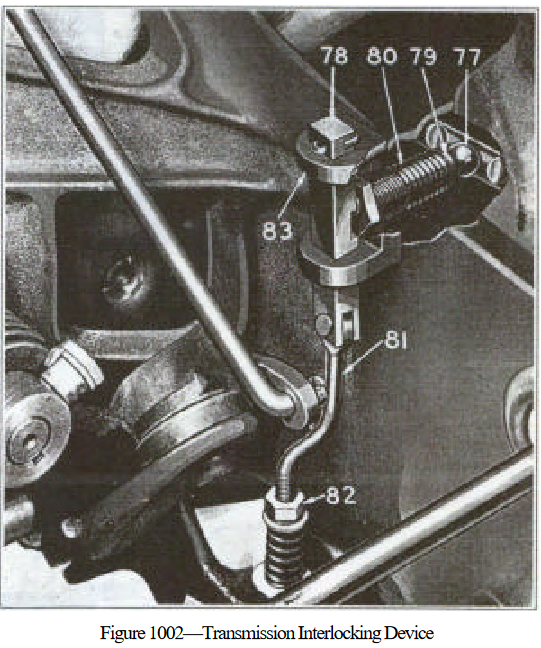
[quote="Kenneth Ufheil post=29258 userid=1396"]If this is a 1934 , as I am guessing from your avatar picture, then the issue is the shift interlock for 2-3 is out of adjustment or broken......It was designed to only allow the shifter fork to move when the clutch pedal is fully depressed, but if there is any change in the clutch disc thickness, and the clutch free play at pedal changes, then the interlock has to be re-adjusted. Could be that the interlock on the right side of transmission behind the bell housing is in need of adjustment due to wear in the release fork shaft and bushings. This could explain why the left side interlock for reverse and first works properly, but not the right side interlock for 2nd-3rd.
Also, the 1934 Hudsons used a stamped steel lock rod that was prone to failiure/ wear, that was superseded by a bar stock lock rod as shown in the attached illustration. There was a upgrade kit sold from late 1935 on that can be retrofited to the 1934 with the stringer bar stock lock rods. Perhaps your car still has the weaker stamped steel lock rods?
=12.6pxShifting Rail Locks
=12.6pxA positive locking device is fitted to both transmission shifting
=12.6pxrails and operated by the clutch
=12.6pxlinkage (Figure 1002). When the clutch is engaged the balls
=12.6px(54 and 77) are locked in the shifting rail notches. When the
=12.6pxclutch pedal is depressed the lock rods (78) move up so that
=12.6pxthe notch is in line with the end of the lock plunger (79 ) and
=12.6pxthe ball (77) is held in the rail notch by the pressure of the spring
=12.6px(55 and 80) only. The links (81 ) should be adjusted so that the
=12.6pxnotch in the rod is below the plunger (79) when the clutch is
=12.6pxengaged. When the clutch pedal is depressed half way, the rod
=12.6pxshould have moved upward far enough to bring the notch in
=12.6pxline with the plunger so that the shift can be made.
=12.6pxThe illustration (Figure 1002) shows the Interlocking
=12.6pxDevice as used on late 1935, 1936 and 1937 transmissions.
=12.6pxThe parts shown comprise Part No. 48855 Interlocking De-
=12.6pxvice Kit which should be used as a replacement on 1934 and
=12.6pxearly 1935 models.=12.6px =12.6pxThe superseded lock can readily be
=12.6pxdistinguished as the lock rod was a stamping instead of bar
=12.6pxstock as used in this kit. For additional usage of the kit on
=12.6pxearlier models see the Numerical Parts Price List or Master
=12.6pxParts Book.
=12.6pxSee Group 11 for adjustment of Interlocking Device on cars
=12.6pxequipped with Electric Hand. 
Thanks for the info! I actually posted on the open forum as well, turns out there’s what I believe a ‘37 linkage installed. 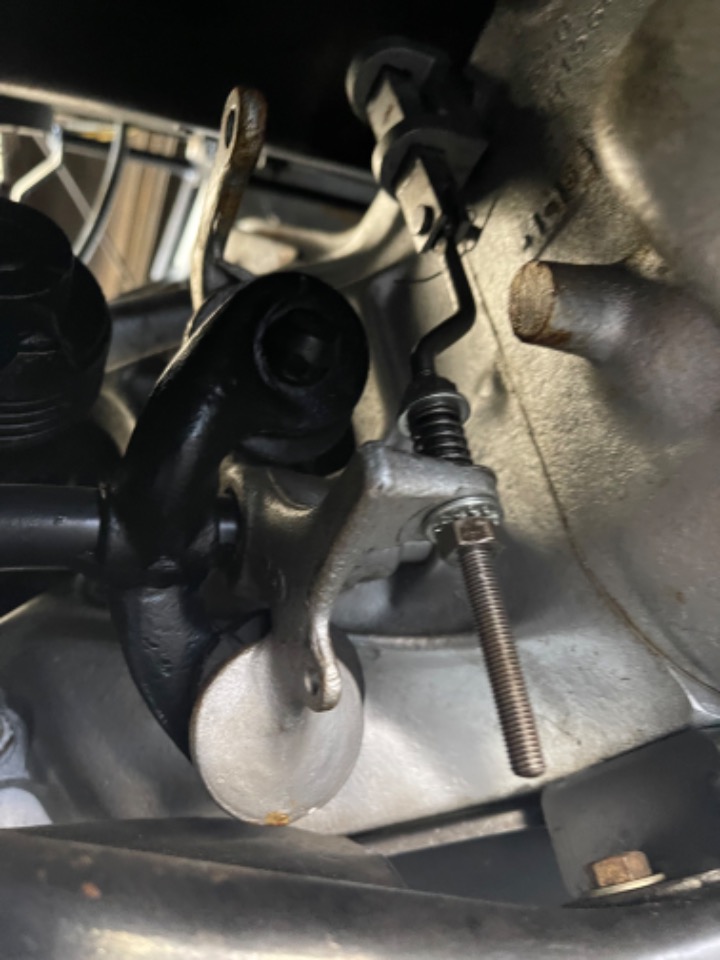
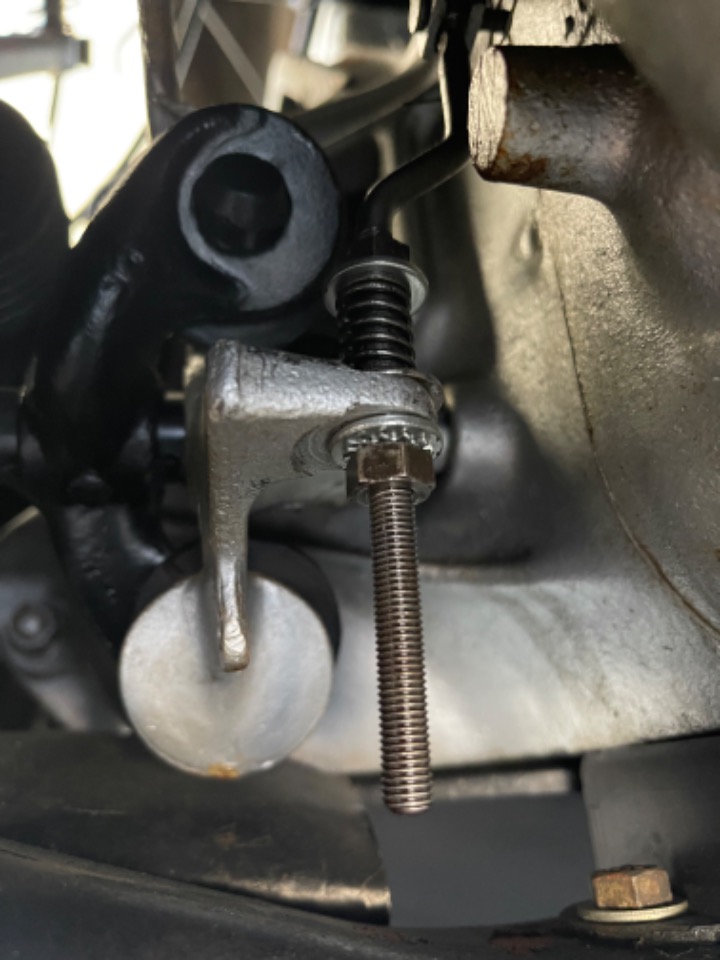
I got it working, however I have another issue now. It looks like the pads are coming apart. I called Wildrick and overnighted 2 pads to replace.
however; when driving, shifting up no problem. When still any shift out of neutral grinds gears, and when at stop sign going into second or first grinds.
also, there’s a ticking or tapping sound coming from trans. I hope I didn’t mess it up….can’t really afford to fix!
when I got back from getting milk, with car in first and clutch fully depressed the car shakes.
So I believe there’s some kind of clutch issue I’m not sure what I’m not familiar with these. I did take a video I’m going to upload to YouTube and I’ll repost here.
Also saw that the reason it wouldn’t go into second or third is the lack of backing nut on the adjustment. I got another to install to keep it from creeping out of adjustment!
You would be better off posting your questions on the Facebook Hudson Essex Terraplane Club page. This forum is a horrible, very user unfriendly pile of crap. I had a hell of a time posting the excerpt from the shop manual and the picture. Unfortunately the club leadership relies on a guy in England to maintain the website for them at no charge......so here we are..... This also why you may wait days, weeks for a reply, if any at all..... Most of us knowledgeable folks have gone to the Facebook Hudson Forums.
Dang…and I don’t have Facebook lol
The clutch release fingers in the pressure plate may be worn down, bent, or not the correct heights at the adjuster bolts on the pressure plate..........Sounds like the clutch fingers are pulling the pressure plate away from the disc at an angle, so that it it acting like a wobbling swash plate, the clutch is dragging on the wobbling pressure plate and when in gear, this makes the car shake. This a can also make the ticking sound you hear.....I advise pulling the transmission/ bell housing and removing the pressure plate and clutch disc, inspect everything, including the clutch fork, the throw-out bearing....the flywheel face, etc.
Damn it was rebuilt and installed by Wildrick, looks brand new. I don’t have the means to do all that…man that stinks! Starting to think I should’ve just got a model A or something cause i got this to enjoy with my kids and I have only got to ride them in it twice lol
I dont know that for sure, but why don't you call Doug and see if he can help you diagnose the problem? I was not aware you had a new clutch put in.
Hi not likley needed but if u want I have a 34 hillhold transmission 17000 miles needs seals. Same but out of terraplane. Sever 34/35 3 spds cheap. Shipping np
I am in Plano TX about 330 miles NE of you. Maybe if you can get it transported here, in about a month, I could look at it. Have access to a lift.
Hmmm thinking......maybe the taper pin(s) on the clutch fork, or the paddles with the pad has come loose or starting to shear?
Man I hope it’s just a simple adjustment. I’ll give Doug a call tomorrow perhaps I’ll send an email first maybe he can talk me through it. Kenneth I really appreciate the offer, and depending on what Doug says I may take you up on that. Now I feel like I couldn’t sell it if I wanted to until I get it fixed lol. Son was asking me today to go drive this weekend. Think maybe I’ll fix and look for something a little more common and kid friendly. Or maybe once I get trans and water pump fixed I’ll be able to enjoy it for a bit lol.
Oh I meant to mention as well, it does seem to be more of an issue after it’s been running a while. Idk if that matters.
Here’s a video of issue: https://youtu.be/JNleQgOC8Kg
I also reached out to Doug via email maybe it’ll be an easy fix. Supposed to give kids rides this weekend for my youngest birthday party!
OK, I am hearing impaired , and with the music in the video, I couldn't really hear the noise you are referring to.However, I can tell you that for 1st gear to grind if you try to force it into 1st immediately after pushing the pedal in is normal for these older cars with no synchro on 1st. Reason is, the clutch disc and the input shaft do not stop spinning the instant you push the clutch in.....they can take a second or more to spin down, depending on how high the idle rpms are.
As for the sound, if it is a rhythymic tick, tick, tick that increases in frequency with engine rpm, it is most likely a bearing.....three bearings come to mind, the pilot bearing pressed into the flywheel that holds the input shaft concentric, the clutch release bearing, and then the front input shaft bearing in the transmission. The bell- housings are notoriously weak on these early cars. If the bell housing is cracked this can possibly allow the input shaft to move out of concentric with the crankshaft when clutch is pushed in, and this will make a vibration or shake. Another thing.....the lower right bell housing to block bolt is a special tapered shoulder bolt with a tight fit in the bell housing and block holes to hold the bell housing concentric with the crankshaft, if this bolt was inadvertently replaced with a standard bolt, the bellhousing could be off center and this would also cause a vibration or shake.
