
Where is the extra length added on the 1941 Commodore Custom with 128 inch wheelbase?
I haven't found any reference to the Commodore Customs wheelbase, I can't tell from pictures where they added the extra 7 inches. Any info will be greatly appreciated. Thanks in advance. Preston 

The ones I've seen had bigger front doors, as used on coupe and 2 door sedans which resulted in larger passenger space.
"Ric"

The SWB cars were 116". Commodores and Supers were 121". Here, the extra length of 5" was up front in the engine compartment. THese cars could easily accept a 6 or 8 cyl engine. THe SWB Deluxe and Traveler could not take the 8 cyl engine as installed at the factory and came standard with the single barrel 175 cid engine (upgradable to the 212 cid version. The Commodore Custom added 7 more inches for 128" wb, which went into the passenger compartment. In this case, the front doors were now the larger doors used on coupes and 2 door broughams (2 dr sedans). I think they also had additional amenities for rear seat passengers. The rear doors may have also been larger compared to the standard Commodore.

As Fred Pinder stated below the additional length on the '41 & '42 Gommodore Custom were in front door area - using the front doors normally used on the 2 dr. Broughams. The difference that Tim Huber is giving is for the 1950 thru 1952 Commodores and the shorter wheelbase Pacemakers,
That makes good sense, using 2 door, doors on a 4 door . Thank you gentlemen for your expert information. I am curious now what the measurements are on 2 and 4 door models, as well as the 41 Big Boy truck. I am looking for a parts car to rebuild a 1941 18-C Hudson truck. 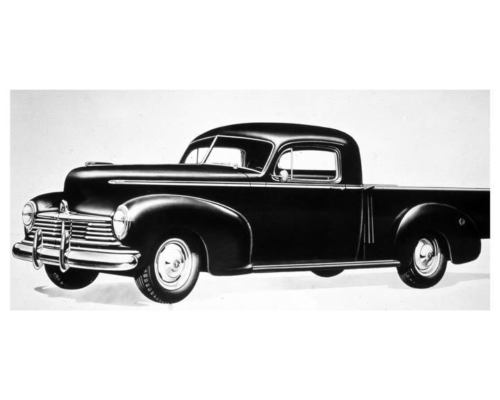
Not quite. There were 3 different wheelbases in 1941. Hudson Six (Traveler and Deluxe) were SWB 116" (also used for 1/2T pickup). Super Six and Commodore were 121". Commodore Custom was 128", shared with the Big Boy pickups. 1942 had the same choices. 1946-47 were all on a single wheelbase of 121" for Super Six/Eight and Commodore Six/Eight. All pre-war short wheelbase models were dropped.. The big boy pickup on 128" wb returned for 46-47.
No, I'm not talking about the 50-52 Pacemaker/Wasp/Super Wasp of 1950-54. Those were 119" (technically 119.875") vs the Super/Commodore/Hornet with wheelbase of 124" (technically 123.875"}.
I have a 1941 1/2T pickup on the shortweel base. Your pickup was made from a Super Six sedan body (mine was made from a Deluxe sedan body). Hudson lopped the sedan off behind the B pillar of the sedan and closed the cab on the back (note, they changed how they did this when they got to 46-47 pickups -- a little different, but not much).
Virtually any sedan door will work, even from a SWB car. The pickup cabs are not very roomy. They all used the standard sedan door. In looking at my 1/2T vs your 3/4T Big Boy, a difference of 12" in overall wheelbase length, basically 5" was added to the front (you can see the difference if you look at where the front fenders mate near the cowl/door area -- there's several inches of space on the longer wheelbase cars/trucks). THe additional 7" went into the bed area. They were all overbuilt with the heavy overload springs in the back, and Hudson thus eliminated the front stabilizer bar (Auto-Poise) and the rear Panhard bar that came standard on passenger vehicles.
Must be a College Professor ! Thanks for sharing your knowledge with the rest of us . I realize my 65 years of working/playing with Hudsons still leaves me with many unknown Hudson facts. Glad you could clarify my statements. 🙂 🙂
"Ric"
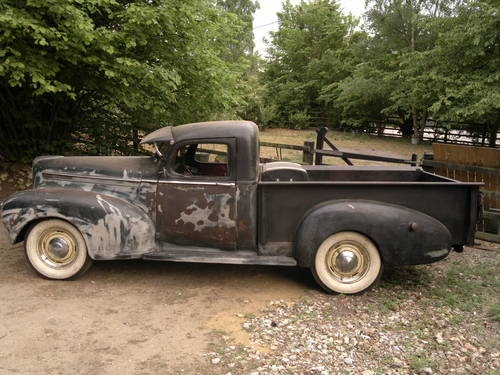
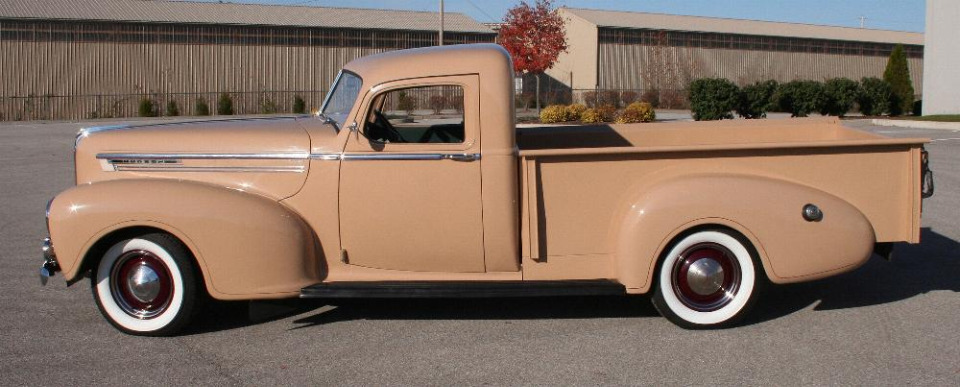
From the internet. C10 SWB and buff colored Big Boy. Note the differences in the lengths of the areas as stated in the previous post. Also note that SWB vehicles had difference hood trim and lights. They also had difference ins some of the front grille trim (diecast used on LWB, Stainless on SWB).
Ric,
I have Three 41 Hudsons, all short wheel base. Especially in looking for parts for the 41 pickup, I realized all the differences there are. Typically, one gets a "nose" for the vehicle they have worked on and taken apart. Now to get it back together again! 1941-42 were very unique years for Hudson offerings. For example, Hudson dropped the Panel Delivery for 1941, and offered for one year only the All-Purpose Delivery van in its place (kind of like a Divco van). Few were made/sold, and that was dropped. There was no panel delivery for 1942, although they did offer the woody station wagon for a final year.
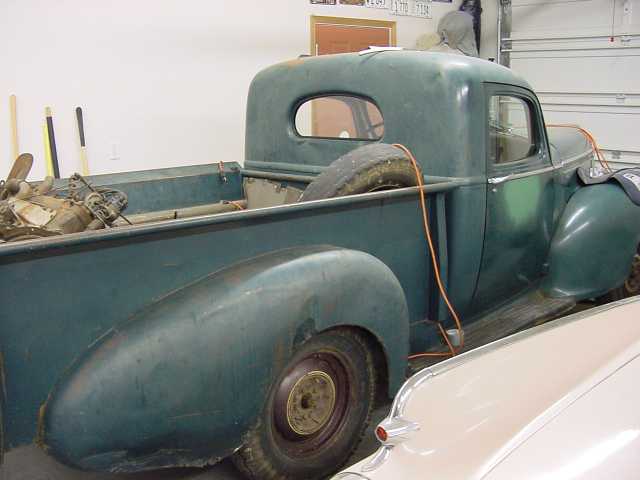
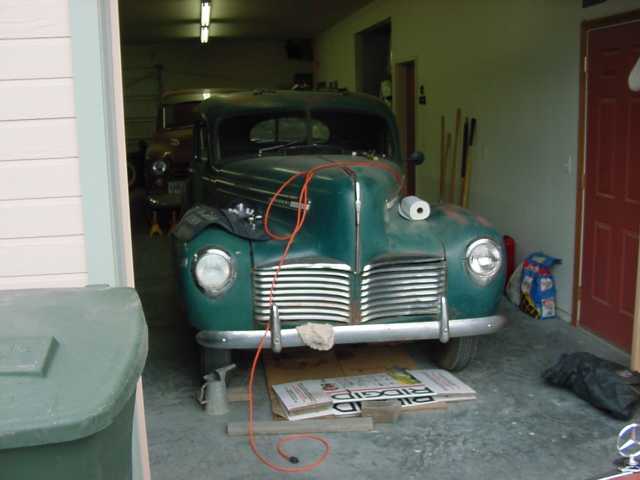

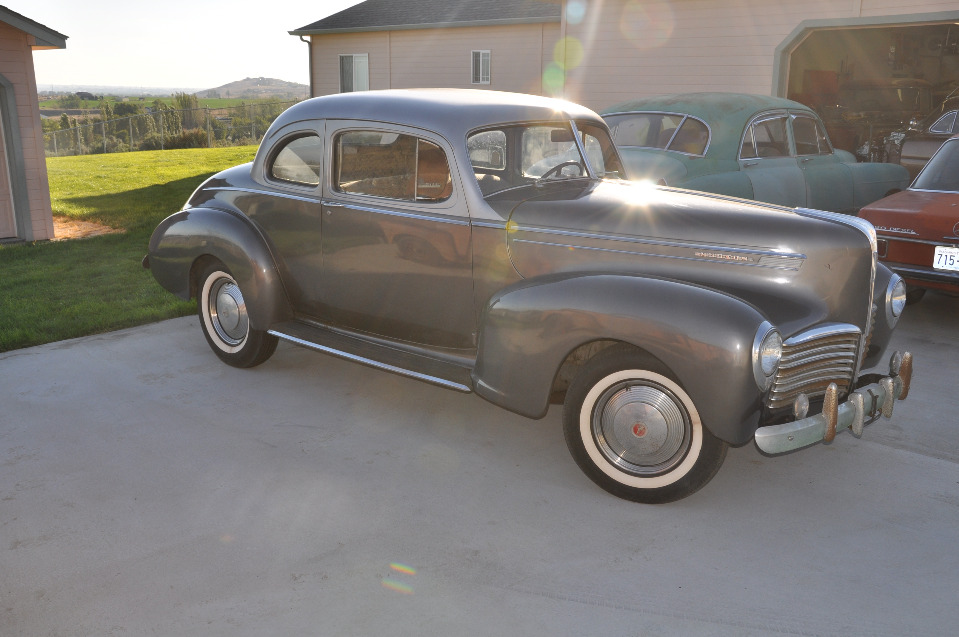
Tim, Just the information I was needing, Thanks again for your expertise. I can move foreword with my plans for a Hudson truck. It will be a challenging build starting from the offerings in my price range. 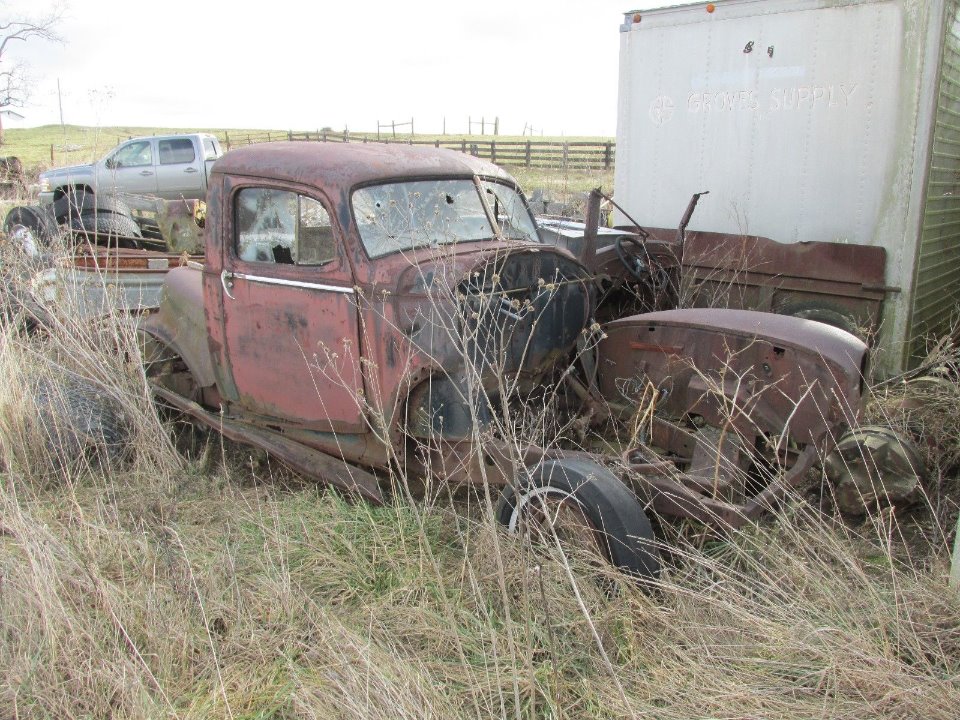

The front doors of a car will work but they are different. The obvious '42-'47 have the flare at the bottom, and once that is removed, you will have to do a little bit of sheet metal work on the door skins where the flare was removed. Next, the lower truck door hinges are wider and don't interchange with the car. A car hinge is about .75" narrower, bolted in the same location but will have a void on the door skin. If you use the car hinge completely, you will need to drill out the rivets in the "A" pillar. You will also need to counter sink the hinge bolts, or use bolts that have a very thin head, when re-installing the door hinge. This is to allow enough room for the door to close all the way when it comes together in the closed position.
Doug,
just curious, does that hold true for all years 41-42? I have no idea. 46-47, yes, but I wonder about the prewar pickups, especially the swb ones. I'll have to go out and measure the hinges on mine. Cab construction did change a bit going from 41-42 to 46-47.
